Sharpening
Dull and Worn
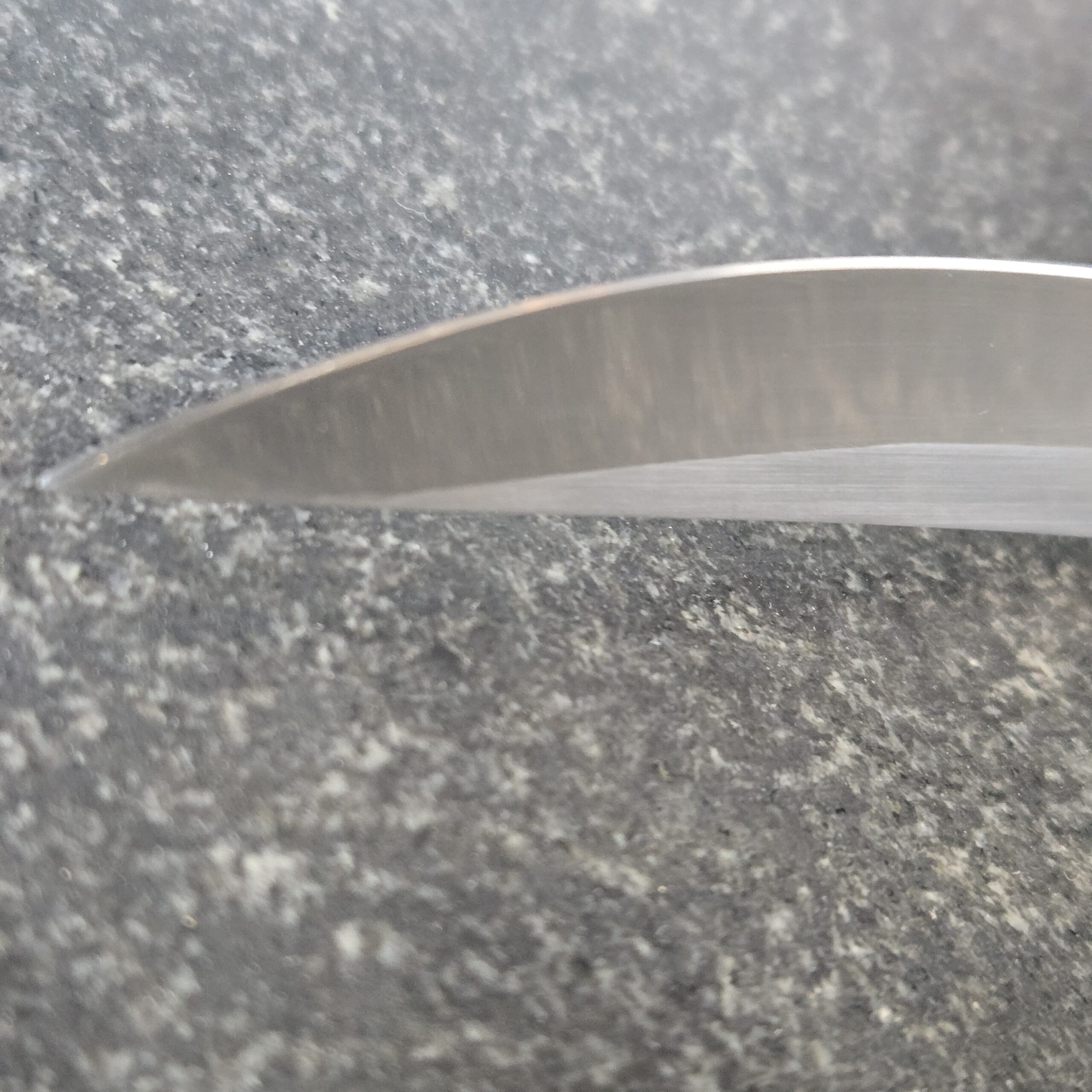
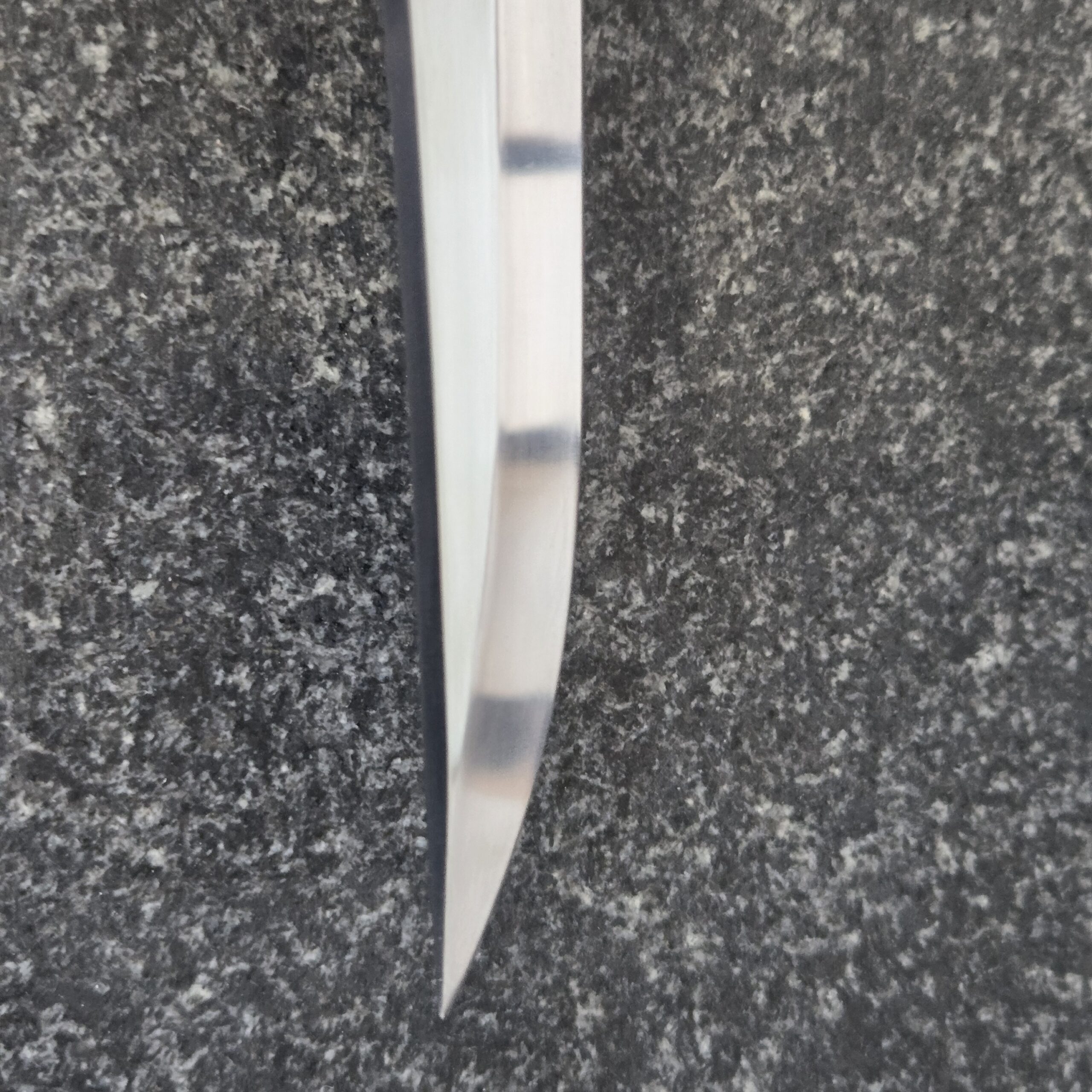
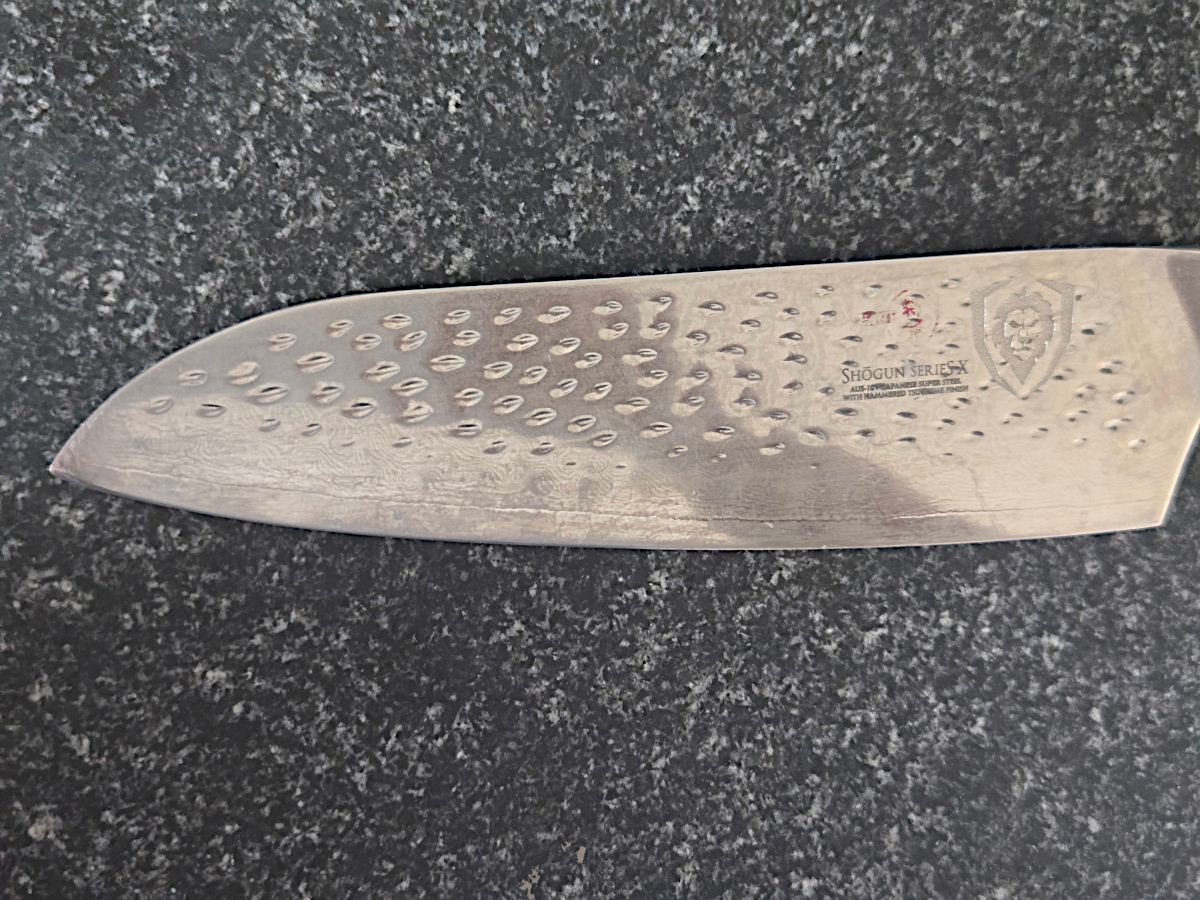
This Damascus kitchen knife has seen extensive use and has been previously sharpened on stones. Over time, the sharpening angle was blended into a rounded curve, resulting in the loss of a true apex. The edge no longer meets cleanly, reducing cutting performance and requiring corrective reshaping to restore proper geometry.
Rust and Discoloration
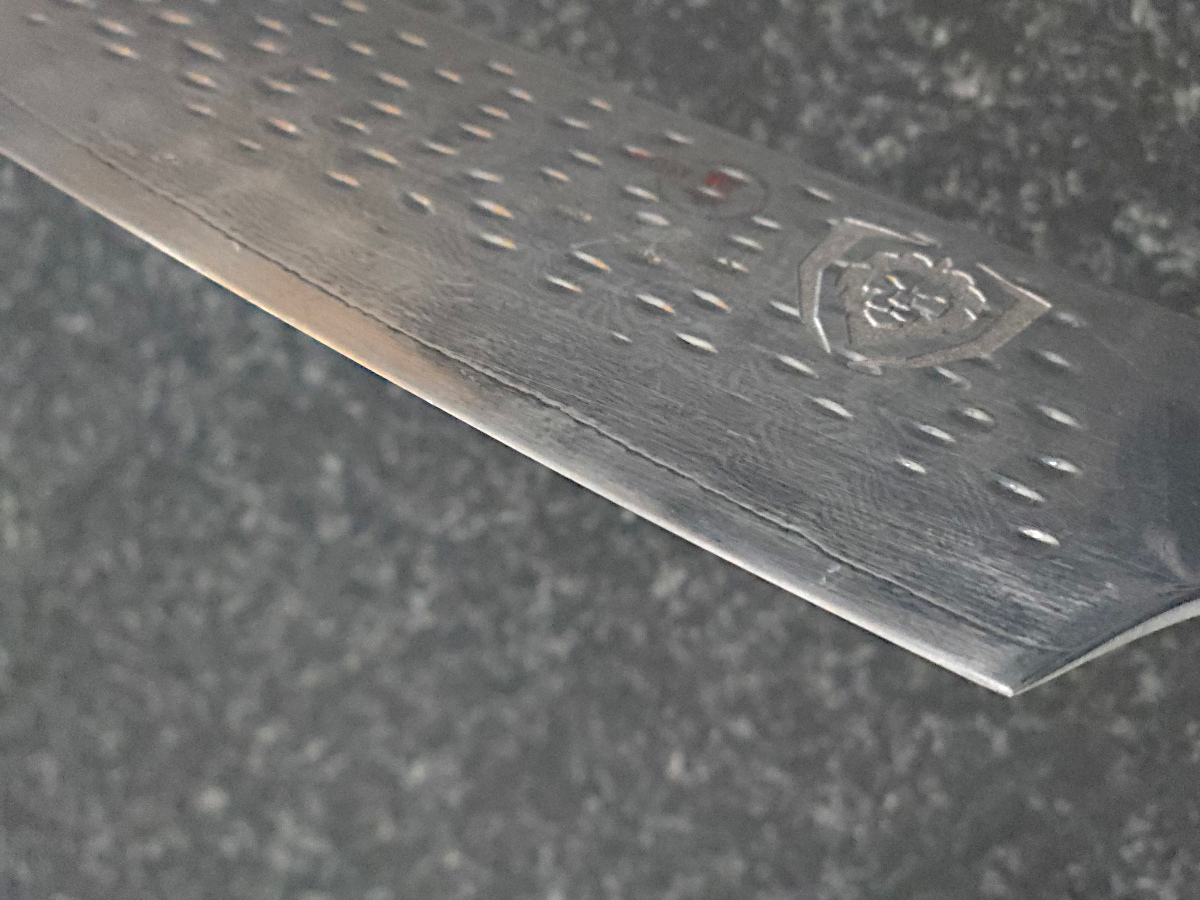
Like many well‑used kitchen knives, this blade has experienced the effects of daily wear and less‑than‑ideal care. It was frequently left among dishes, submerged in water, and not cleaned after use. As a result, it developed minor rust, surface discoloration, and a collection of small dings along the edge and body.
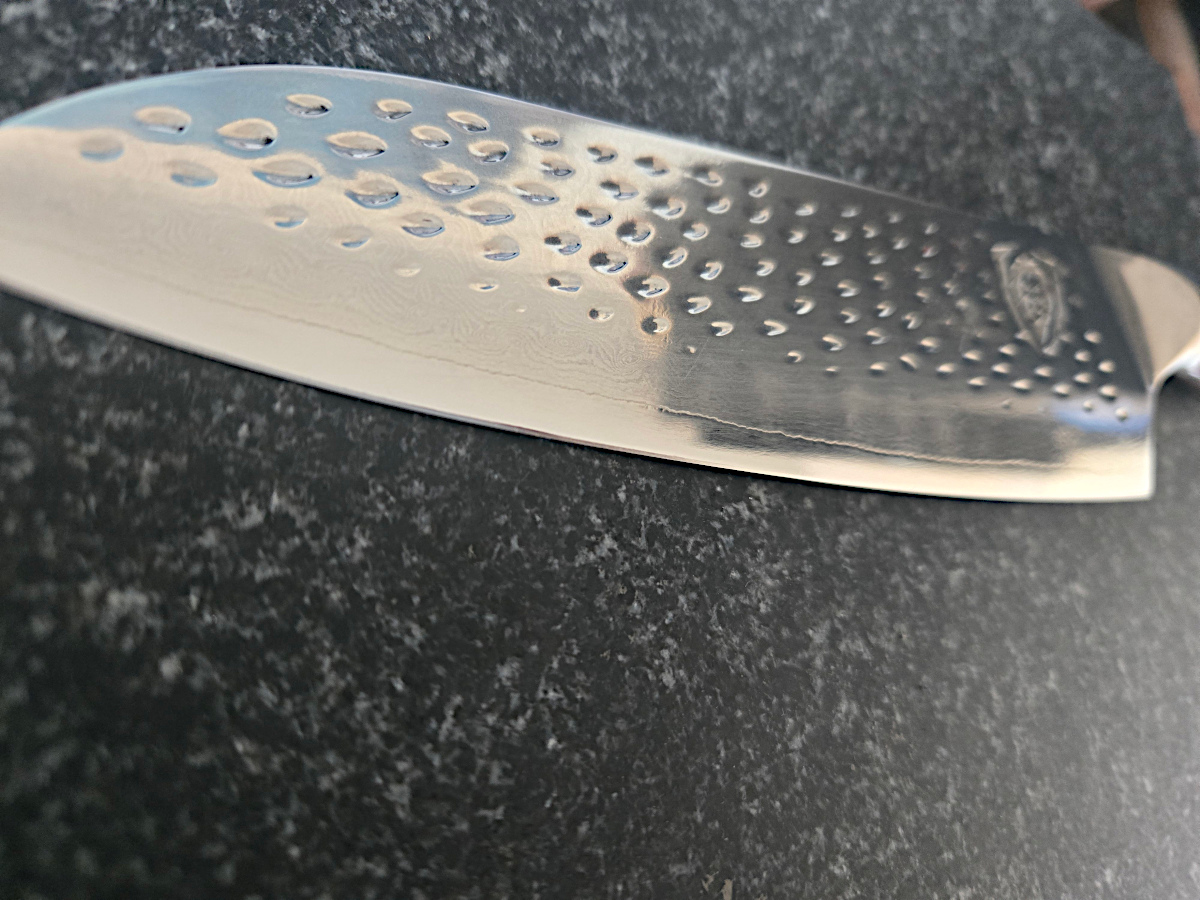
Sharpened and New Angles
Surface oxidation, scale, and rust were carefully removed to prevent further contamination and to reveal a clearer picture of the work required. The edge was reground all the way to the heel, and a new apex was cut to restore the blade’s intended geometry. This process not only improves durability and edge retention but also delivers precise, scalpel‑sharp cutting performance.
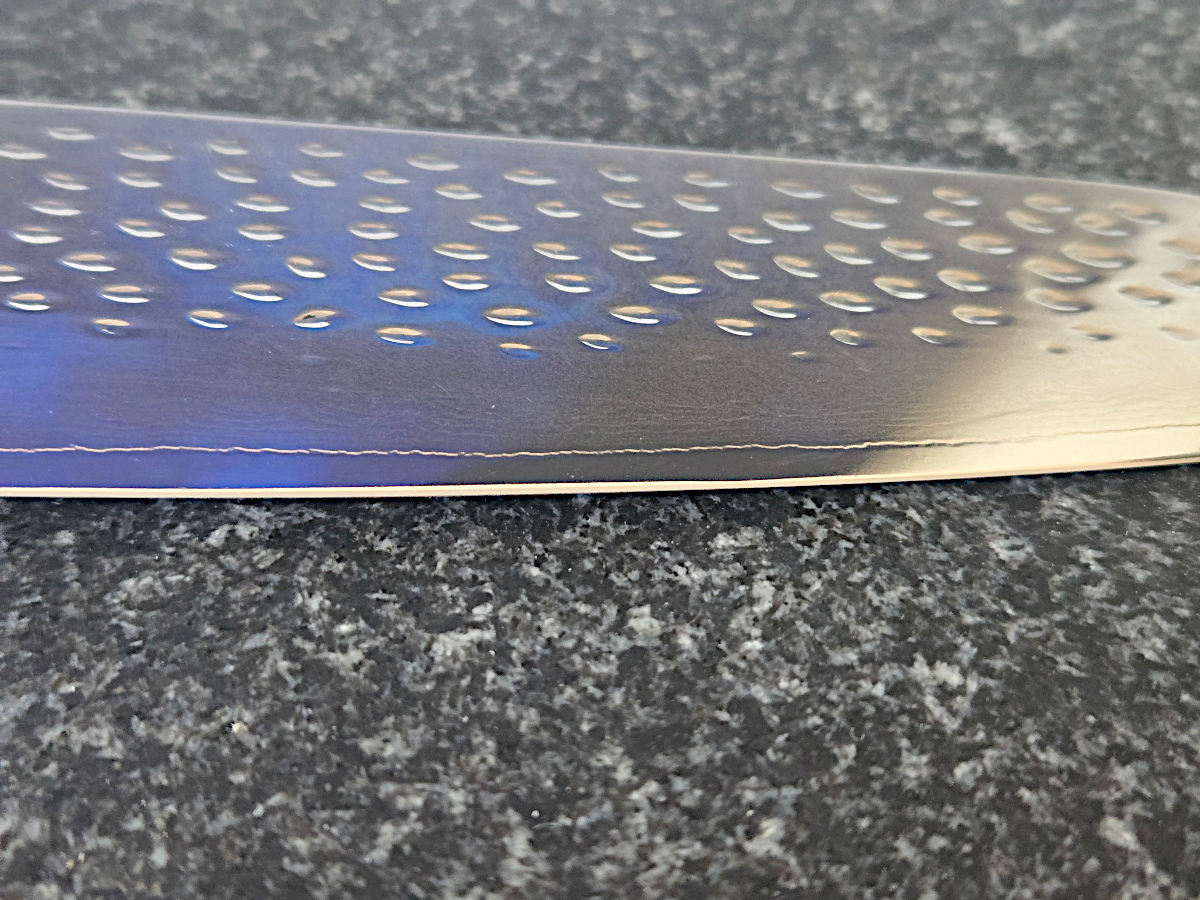
Polished and Honed
Once the grinding, apex geometry, and surface preparation were completed, the blade received a full polishing. The final honing of the apex removed any remaining micro‑burrs, resulting in a clean, precise edge with a silky‑smooth cutting feel.
Basic V‑Apex Sharpening — $10.00For blade lengths up to 8 inches, free of chips or heavy dings.
This service restores a clean, precise V‑shaped apex, improving sharpness and cutting performance while maintaining the blade’s original geometry.
Advanced V‑Apex Sharpening + Basic Polish — $15.00 For blade lengths up to 8 inches with minor pitting, small dings, or light chips.
This service restores the blade to full working condition by refining the edge geometry and applying a basic polish. The result is a sharper, smoother, and more efficient cutting edge with reduced friction and improved accuracy.
Restoration
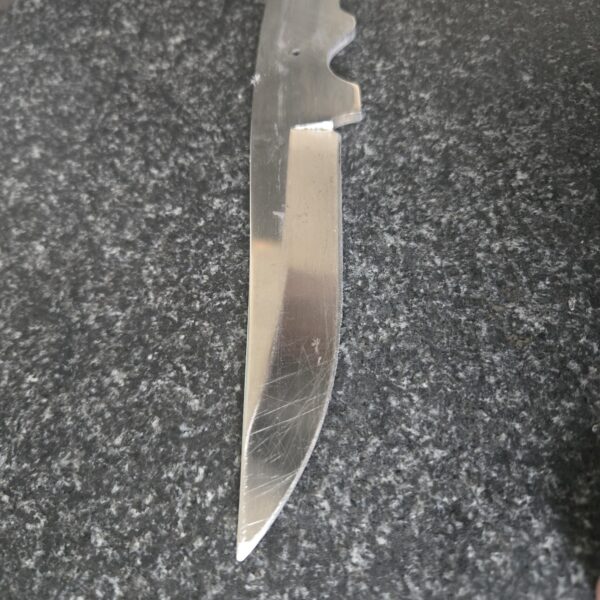
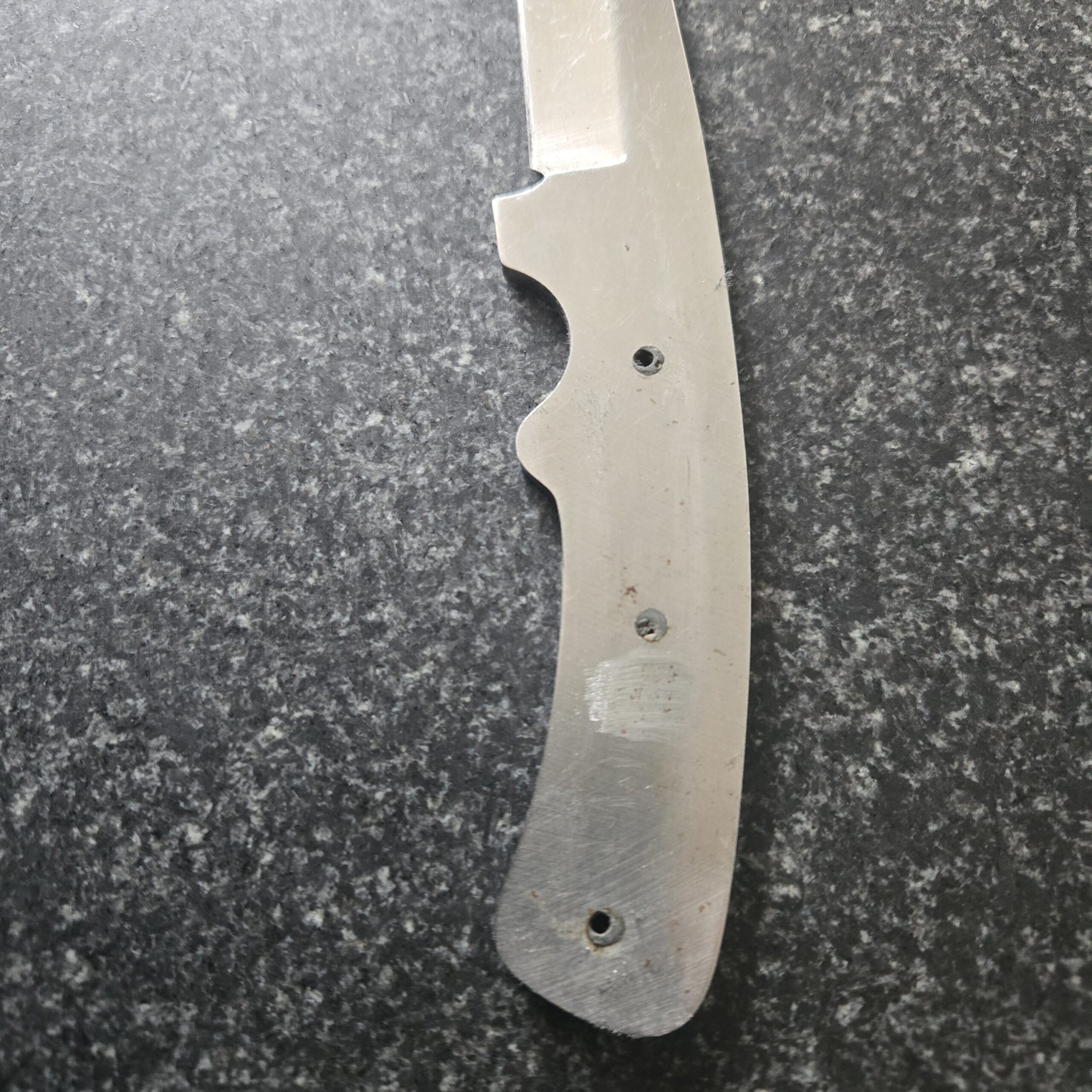
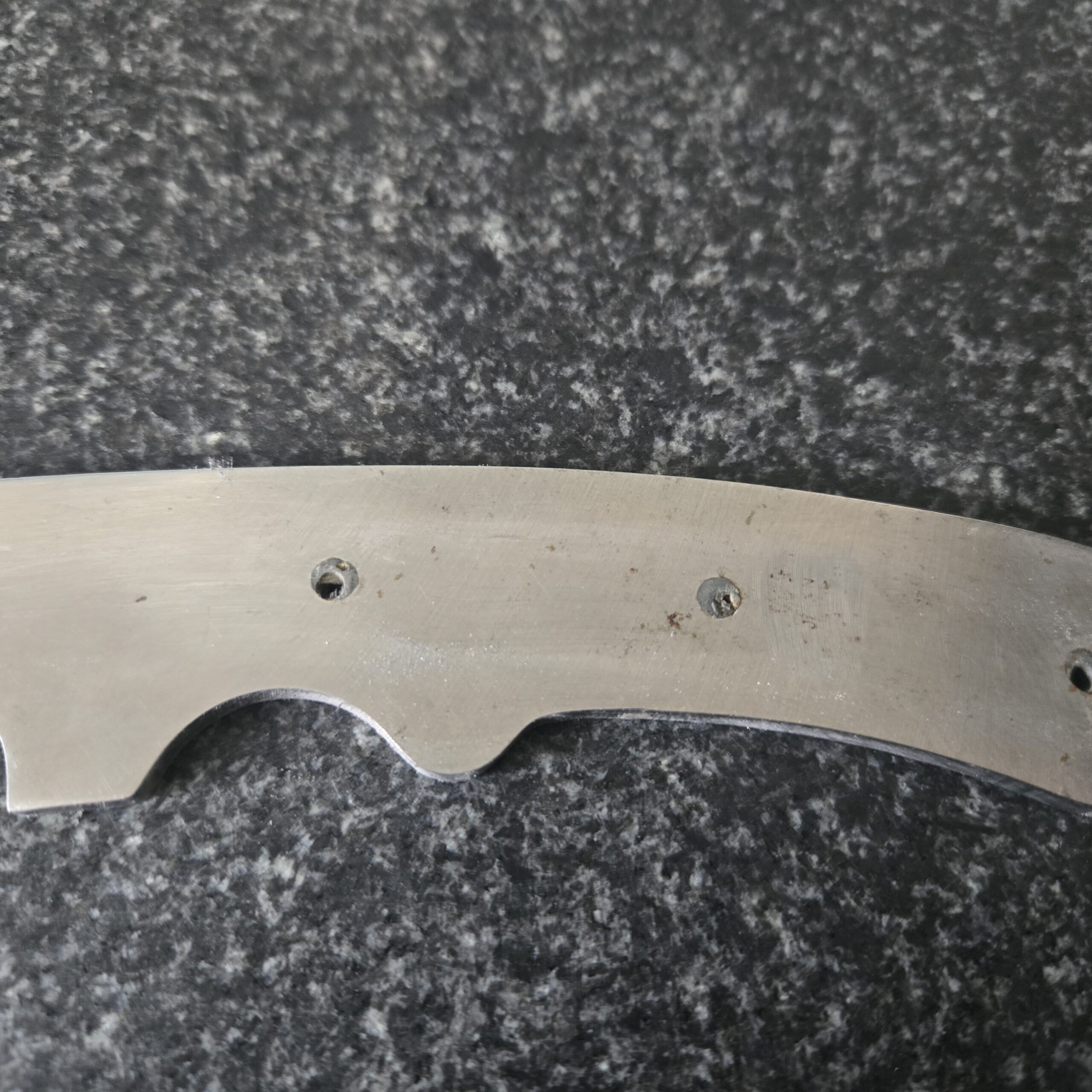
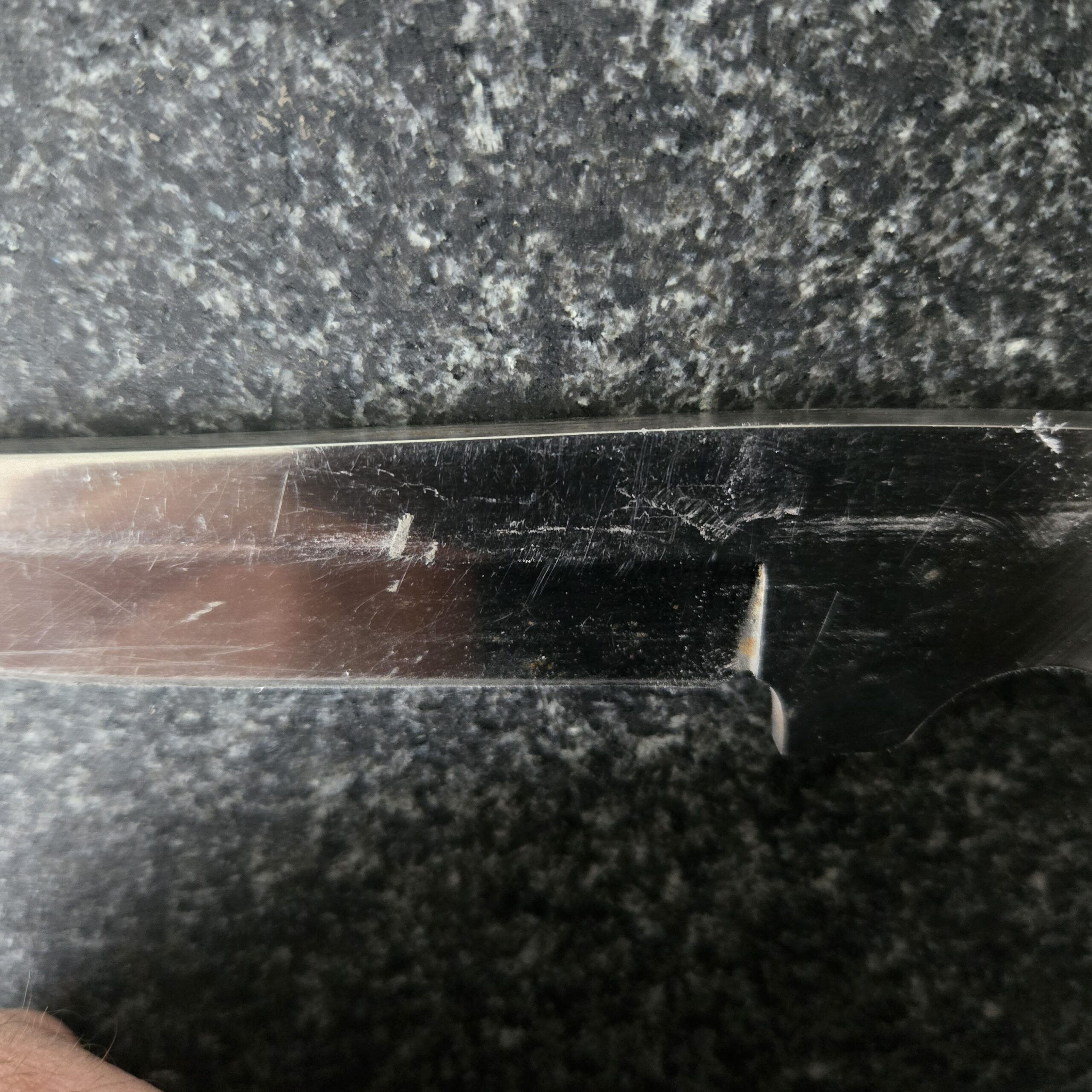
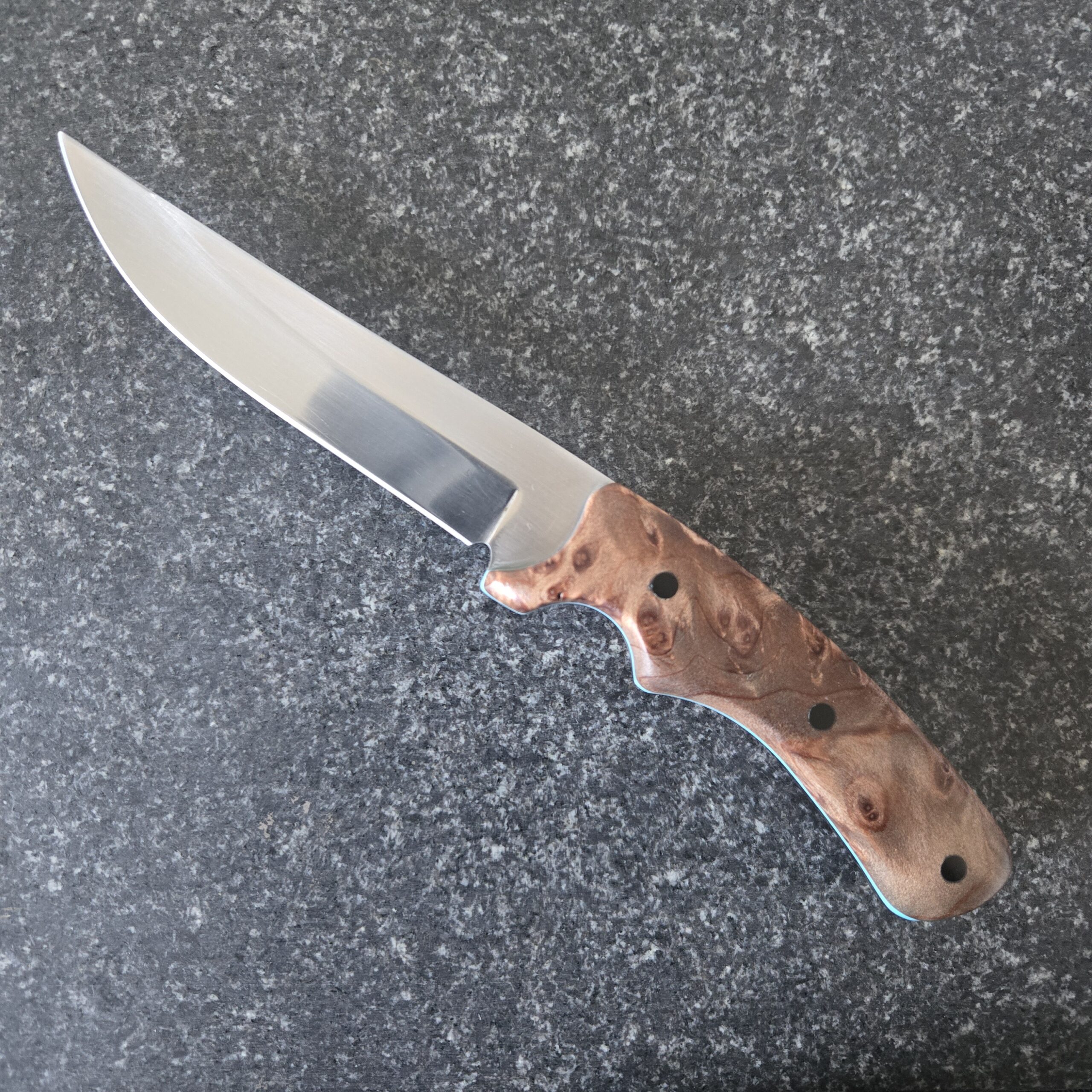
This project began with a client’s favorite knife that had spent years sitting on a shelf. The blade was heavily scarred, the scales were missing, and a previous repair had been attempted using automotive weld epoxy. Staining and general wear were present throughout.
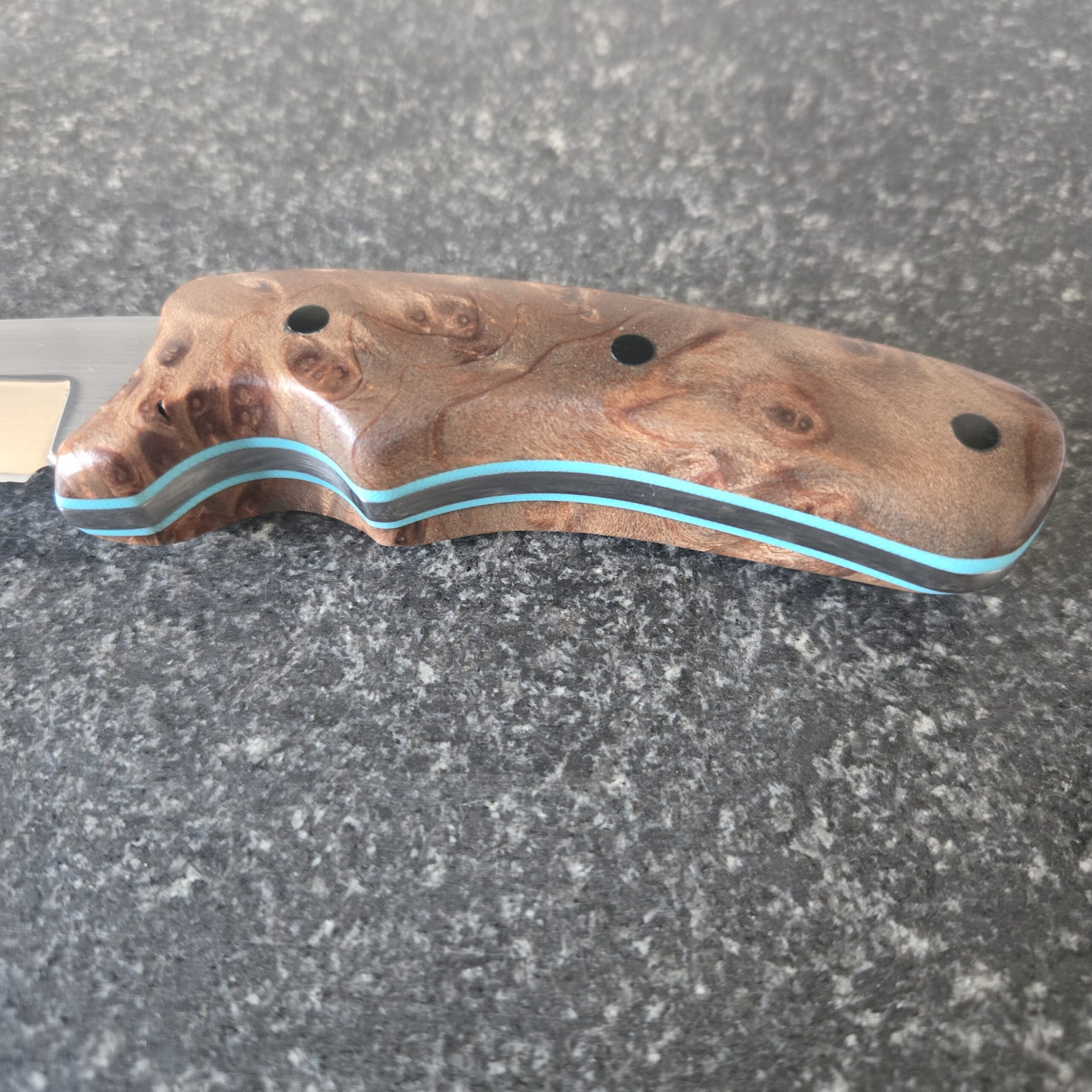
The blade was fully refurbished, and two offset textures were applied to restore both function and visual appeal. New scales were fitted and shaped, with additional contour work to ensure comfort. The handle was intentionally left larger and custom‑contoured to accommodate the client’s hand issues, providing a secure, pain‑free grip that smaller handles could not offer.